Retroreflective coating, made in-house
Retroreflection, in one paragraph
Retroreflection sends light back toward its source instead of scattering it around the room. In optical tracking the source is the camera ring-light, so a retroreflective marker is bright exactly where the sensor looks and dark everywhere else.
Most marker sellers buy reflective tape and convert it. We run the coating line itself — substrate, optical layer, cure and conversion — which is why return intensity can be specified, measured and repeated batch after batch.
- Coating and conversion under one roof
- Return intensity measured at tracking geometry
- Batch records available to OEM customers
- Custom return grades and shell colours
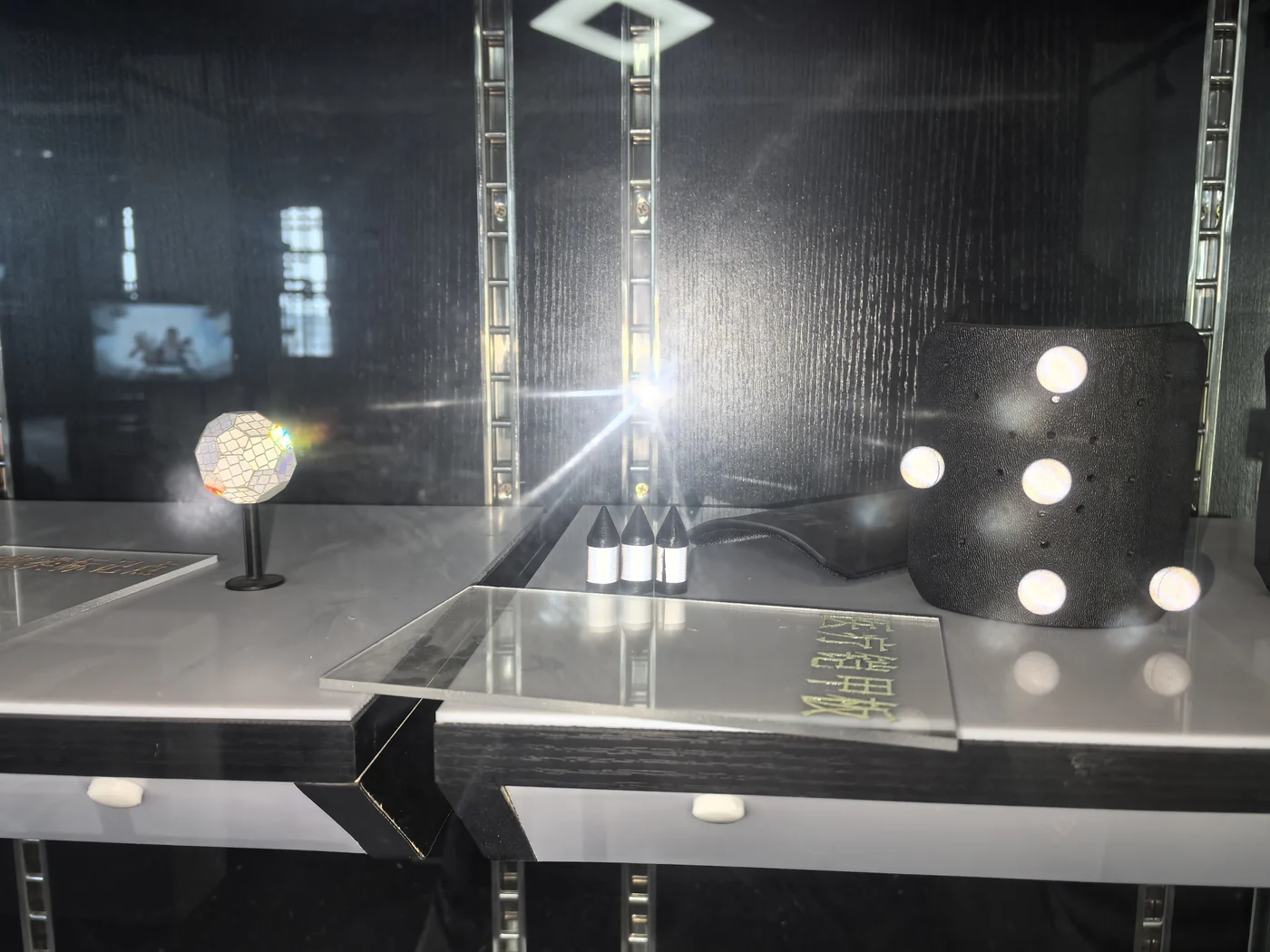
Five stages from film to finished marker
Substrate preparation
Sphere shells, hemisphere blanks, film and sheet stock are cleaned and keyed so the coating bonds mechanically rather than sitting on the surface.
Coating application
Retroreflective optical elements are laid in a controlled layer; thickness uniformity sets how consistent return intensity is across a batch.
Cure and bond
A thermal cure locks the optical layer to the substrate for handling, sweat and shop-floor resistance.
Reflectivity QC
Batch samples are measured for return intensity at tracking geometry. Out-of-spec batches are reworked, not shipped.
Conversion
Coated stock becomes spheres, hemispheres, die-cut dots, coded frames and magnetic assemblies in our conversion shop.
Sheets go in, cartons come out
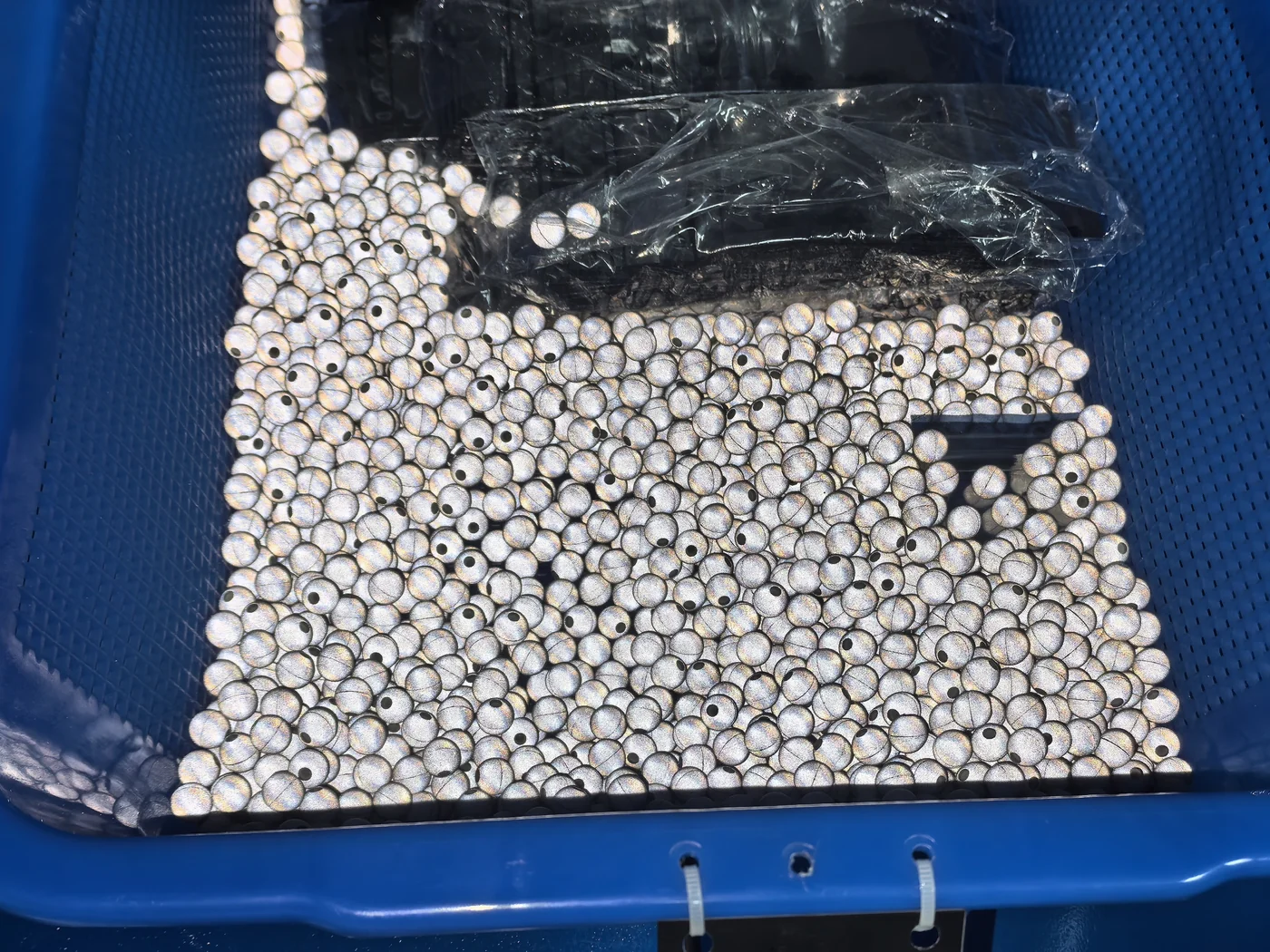
The conversion shop turns coated stock into spheres, hemispheres, die-cut dots and coded frames. Nothing is sent to a third party between coating and packing, which is why a batch record can be traced back to a carton.
- Die-cutting, counting and bagging in one building
- Batch photos before the carton is sealed
- OEM labels applied on the same line
What a consistent coating buys you
Tracking quality is a ratio: returned light against everything else the camera sees. When coating thickness varies, marker brightness varies with it — centroids drift, small markers drop out at distance, and the solve becomes the limiting factor in a capture session.
A controlled coating line removes that variable. It also means a 2 mm micro hemisphere and a 19 mm stage ball behave like the same material under different geometry.
See the rangeGet a factory quote within 24 hours
Send sizes, threads and quantities — or just the scanner or tracking system you run. We answer with a specification match, MOQ and factory pricing.